All posts by luczak@cdes.fr

Third MESGO session take place in London

Unique classroom for MESGO II participants at the Lord’s Cricket Ground in London!

The third session of the second edition of the Executive Master in European Sport Governance (MESGO), focusing on the governance and regulation of sporting competitions, took place from 14 to 18 January in London.

During the week, the debates focused on the financial regulation of sport, notably analysing the UEFA financial fair play initiative, the licensing system of the German football Bundesliga and other regulations existing in Premiership Rugby in England. Other presentations focused on the regulation of sports labour markets from both a legal and economic point of view. The role of agents and the current debate surrounding third-party ownership were also among the topics covered. Finally, the role of supporters as stakeholders in the governance of sports clubs, especially in football, was debated.

Daily gatherings took place at Wembley Stadium, Lords Cricket Ground, Arsenal Emirates Stadium and in the premises of the MESGO’s local academic partner, Birkbeck College.

The 20 MESGO participants also took the opportunity to attend the English FA Cup football match between Arsenal and Swansea.

The next session will take place in Brussels in March and will be dedicated to the legal framework of European sport.

MESGO II participants in Switzerland for second session

MESGO II participants testing their cooking skills at a surprise dinner

The second session of the Executive Master in European Sport Governance (MESGO), focusing on sports organisations and their governance, took place from 12 to 16 November in Switzerland, at the headquarters of various prestigious international organisations.

During the week, the debates focused on the governance of national and international sports organisations, with case studies dedicated to the European Golf Tour (PGA Europe), the International Olympic Committee (IOC), the Fédération Internationale de l’Automobile (FIA), the International Fencing Federation (FIE), the International Equestrian Federation (FEI), UEFA and the International Cycling Union (UCI). Other presentations focused on corporate governance issues, the specificity of Swiss law with regards to associations, stakeholder representation and the role of professional leagues. Finally, a comparison with the sector of humanitarian NGOs was made, through an in-depth study of the governance of the International Committee of the Red Cross (ICRC). Daily gatherings took place in Lausanne (at the maison du sport international and the FEI), Nyon (at UEFA) and Geneva (at the ICRC).

The 20 MESGO participants also took up the entertaining opportunity of a football match against UEFA staff and of a cooking workshop.

The next session will take place in London in January 2013 and will be dedicated to the governance and regulation of sporting competitions.

New intake for the MESGO

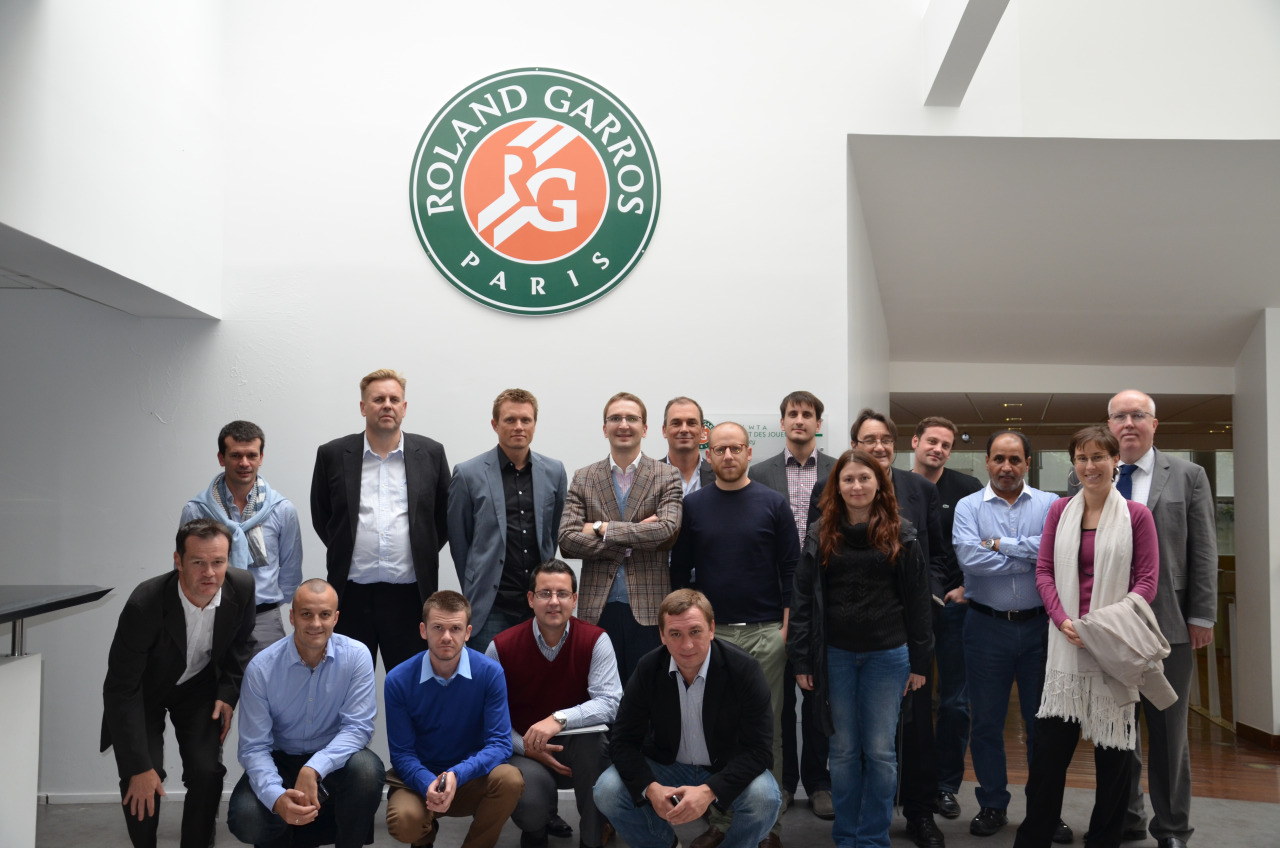
MESGO II participants at Roland-Garros in Paris

The MESGO is a unique programme for decision makers coming from the European sport movement (federations, media, sponsors, public actors). Launched by five universities internationally recognised in the field of sport governance, the MESGO welcomed in September its second cohort in Paris.

The twenty participants, managers and executives coming from all over Europe (Russia, Spain, Italy, Macedonia, Lithuania, Denmark, etc.) and from Qatar, will benefit from nine one-week sessions and cover the main stakes that the sport industry faces nowadays: ethics, marketing, European legal framework, sports events, etc. A session in New York City will also allow the participants to make comparisons with the North American model where governance emerged in a very different context and history. The first session, organised in prestigious venues (Sciences Po, Roland Garros, the French Football Federation and the French national olympic committee – CNOSF) fulfilled three objectives:

– to give an overview of the international sports environment at institutional, legal and economic levels;

– to show that the established worldwide and pyramidal organisation of sport, and some of its characteristics, make it a rather special economic “product”;

– to take a more focused look at the European sports model and consider, specifically, the governance of sport.

Speakers included the UEFA General Secretary, Gianni Infantino, the International Ice Hockey Federation (IIHF) President, René Fasel, the FIFA Secretary General, Jerome Valcke and Maurizio Gherardini, Vice President of basketball operations of the Toronto Raptors (NBA).

To celebrate this launching, a gala dinner was organised in the grand 18th century setting of la Maison de l’Amérique Latine. This event gathered participants of the past and the current cohort, along with prestigious guests such as presidents of European sport federations, former ministers and representatives of sports organisations.

The last MESGO session took place in Nyon

The ninth and last MESGO session, focusing on the Future of Sport Governance, took place from 13 to 17 February 2012 in Nyon (Switzerland), at the House of European Football (UEFA Headquarters).

After two days dedicated to the defence of their thesis by the MESGO participants, the programme was closed by prospective analysis on the Future of sport, covering issues as new technologies, external factors (globalisation, climate change, ageing of the populations, urbanisation…) influencing the system in the long run, cooperation between public and private bodies, importance of soft law instruments and key factors to be considered regarding the future of the sports movement.

For their last MESGO session, the participants were also able to attend an ice-hockey game between the Genève Servette HC and SC Bern.

Graduation of the first MESGO participants

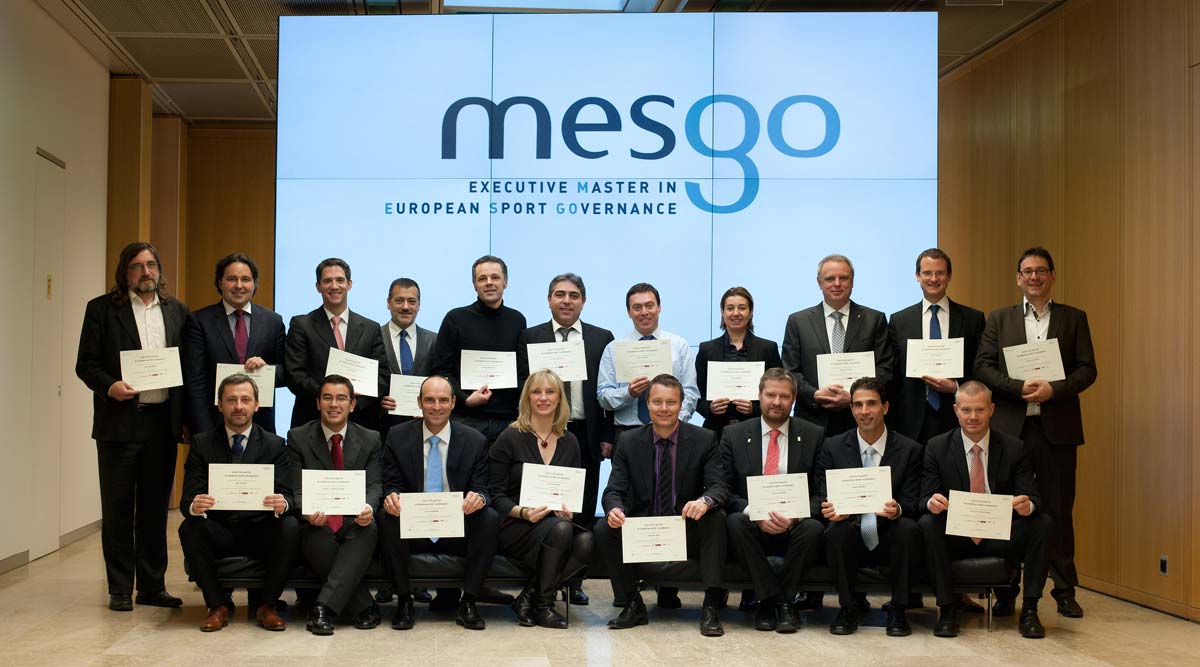
MESGO I participants with their masters after the Graduation Ceremony at UEFA headquarters

A total of 19 graduates have received their MESGO Diploma at a ceremony at the House of European Football in Nyon (UEFA Headquarters) – and have been urged to use the knowledge they have gained to nurture the well-being of football and other sports in the coming years.

The candidates have successfully completed the 18-month course – the inaugural one in a programme which centres on sports governance in the current-day sporting world.

The successful graduates were encouraged by several speakers at the ceremony to make profitable use of their new expertise. “Today is a historic day,” UEFA General Secretary Gianni Infantino told them. “Today marks the beginning of what will be known as the Sports Governance Spring – you are the leaders of this new evolutionary movement in sports governance, and you will shape, with your experience, the future of European and international sport.”

FIBA General Secretary Nar Zanolin highlighted the hard work that lies ahead for future sporting leaders. “You have gone through a long journey,” he told the graduates. “Hopefully you have learned a lot, and hopefully you will take this back to whatever sport you are involved in, in whatever capacity, and help the development of sport through proper governance.”

The IIHF General Secretary Horst Lichtner, who was a participant in the first course, passed on the same message: “Thank you to the universities for this brilliant idea and thank you to the federations for their support. It’s time to shape the future and we are the pioneers. I’m confident that we will be able to contribute to the further development of the sports we love.”

“It is a very special moment for you as graduates, and also a very special moment for the universities,” said Sciences Po executive director Inge Kerkloh-Devif. “As you will have a diploma of Sciences Po, you will join a network with 53,000 other alumni – some of whom you may know. Welcome to these alumni. I hope it was an interesting experience and perhaps you will have new ideas to implement. You can be proud, you will be at the beginning of this new adventure. Sciences Po is also proud to be part of this academic family helping to make this programme happen.”

“When we started to think about this training, the goal was very ambitious,” CDES executive director Didier Primault added. “The project was something like our Champions League, but we have been able to build a dream team [of universities and federations]. And the project became a reality thanks to you as participants.”

“MESGO is an international project, there are a lot of relationships, and people have to be cooperative and disciplined to make it work,” said Sean Hamil from the Birkbeck Sport Business Centre. “I can say that it’s been a tremendous group to work with – academic and sporting partners.”

The MESGO team wishes good luck to the first MESGO graduates and looks forward to welcoming the second edition participants!

Yannick Souvré, MESGO participant, wins trophy for the best female athlete’s conversion in 2012

Organised by the tourist office of La Toussuire – Les Sybelles, the Centre de Droit et d’Economie du Sport of Limoges (CDES, MESGO academic partner) and MG Sport Pro (association of general managers graduated by CDES), the fourth Toussuire Sports Conversion Trophy awards ceremony was held in La Toussuire, a French ski resort, on 9 January 2012. The purpose of the awards is to highlight the most successful career changes of retired athletes.

With a jury chaired by Olympic ski champion Jean Pierre Vidal, the 2012 trophies were awarded to Marc Lievremont (rugby), for the best conversion to general manager; Laurent Jalabert (cycling), for the best male athlete’s conversion; and Yannick Souvré (pictured), for the best female athlete’s conversion.

The MESGO congratulates Yannick on her well-deserved award.

The eighth MESGO session took place in New York City (USA)

The eighth MESGO session, focusing on the North American model of sport, took place from 28 November to 2 December in New York City (USA).

This particularly rich session was the opportunity for an in-depthstudy of the North American professional leagues, and in particular their regulatory tools, such as the salary cap and the draft, the mechanisms of collective bargaining (and lock-outs) and competition law issues.

Among the other topics covered during the week were college athletics and the university sports system (NCAA), the organisation of an NBA franchise, the specificities of US Olympic marketing and the American sports arbitration mechanisms.

Hosted in outstanding conditions at the headquarters of the top American sports organisations (National Hockey League (NHL), National Basketball Association (NBA), Major League Soccer (MLS) and National Football League (NFL)), plus Madison Square Garden and Columbia University, the MESGO participants were able to debate these issues with prestigious speakers such as David Stern, Gary Bettman and Don Garber, commissioners of the NBA, the NHL and the MLS respectively.

The final MESGO session will take place in Nyon (Switzerland) from 13 to 17 February 2012 and will be dedicated to the future of sport governance and the participants’ defence of their theses.

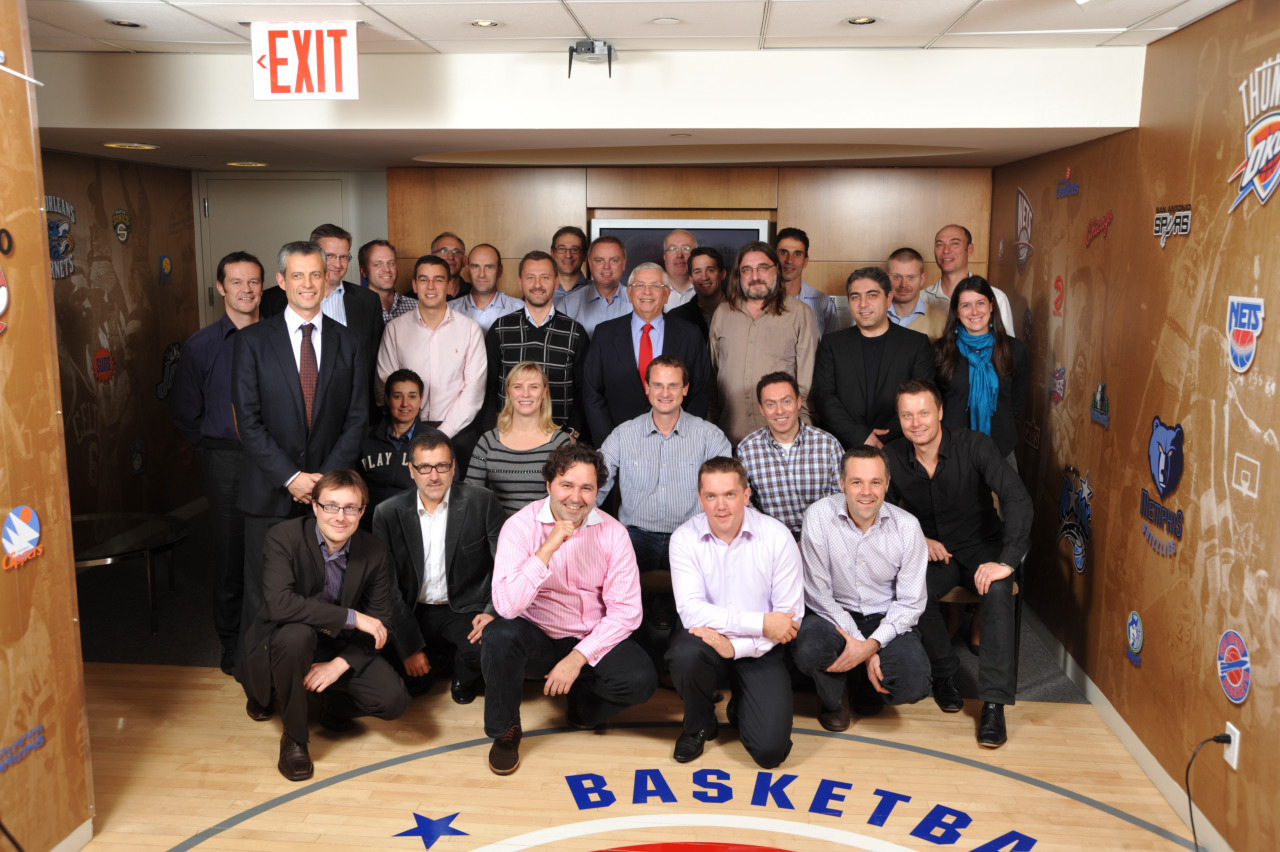
MESGO I participants with NBA Commissioner David Stern

The seventh MESGO session took place in Mainz and Frankfurt (Germany)

The seventh MESGO session, focusing on ethics in sport, took place from 3 to 7 October in Mainz and Frankfurt (Germany).

Among the topics covered during the week were corruption in sport (sports betting and match fixing, corruption risks and compliance), discrimination (disabled sport, racism and violence), corporate social responsibility and corporate communications, and doping.

Daily gatherings took place at Mainz University, the new Coface Arena,the premises of the German Football Association (DFB) and German sports confederation (DOSB), and ahigh-performance rowing centre.

When it came to relaxing, local biers and wines were in the spotlight…

The next session will take place in New York City at the end of November and will be dedicated to the North American sports model.

The sixth MESGO session took place in Barcelona

The sixth MESGO session, focusing on sports events, took place from 13 to 17 June in Barcelona.

Among the topics covered during the week, the presentations focused on bidding processes for sports events, public policies on hosting sports events, impact of sports events and legacy issues, knowledge transfer, risk management and crisis communication.

Moreover, some of the major sports events in Barcelona were studied in details, like the Barcelona Open tennis tournament, the 1992 Summer Olympic Games, the Euroleague Final Four, the Formula One and MotoGP events, the Barcelona World Race and the FINA World Swimming Championships 2003 and 2013.

Daily gatherings took place at INEFC premises (Montjuïc), Camp Nou (FC Barcelona), Circuit of Catalonia and Barcelona Harbour.

In terms of entertainment, the participants had the opportunity to have a stretching and juggle lesson, to test their driving skills in a karting race and to visit the Barcelona Harbour on board of a boat.

The next session will take place in Mainz/Frankfurt (Germany) in October. The session will be dedicated to ethical challenges in sport.